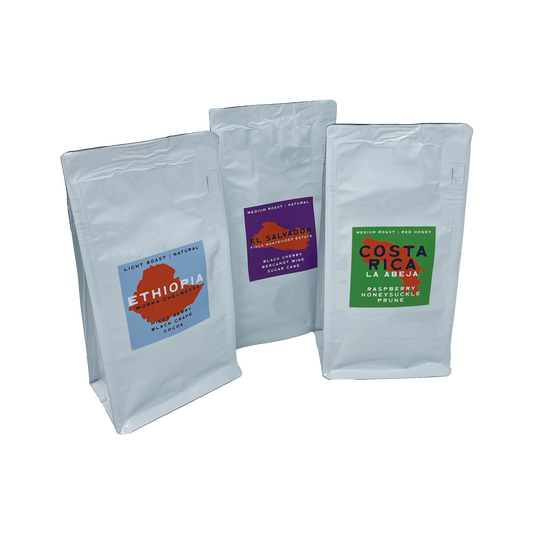

Coffee roasting is the moment when possibility becomes reality. Every coffee bean arrives at the roastery carrying an immense amount of latent potential—genetic traits shaped by varietal selection, chemical structure influenced by altitude and soil, sugar development governed by climate, and flavor precursors nurtured through months of human labor on the farm. But none of that potential is guaranteed to appear in the cup. Roasting is the gatekeeper. It is the process that decides whether those inherent qualities are preserved, amplified, muted, or completely erased.
This is where the distinction between large-scale commercial roasting and small-batch roasting becomes critical. Large-scale roasting is built around the priorities of efficiency, throughput, predictability, and volume. Its goal is to move massive quantities of coffee through machines as quickly and uniformly as possible while minimizing risk. Small-batch roasting, by contrast, is built around responsiveness and intention. Its goal is not simply to roast coffee “correctly,” but to roast each coffee appropriately—according to its unique density, moisture content, processing method, and flavor potential.
The difference between these two approaches is not subtle. It is structural in the way heat moves through the beans. It is chemical in the way sugars, acids, and aromatics develop. And it is sensory in the way the final cup tastes—how sweet it feels, how clearly flavors present themselves, how clean the finish is, and how expressive the coffee feels overall.
Small-batch roasting allows roasters to work with the coffee instead of against it. Rather than forcing every bean to conform to a fixed, production-driven profile, small-batch roasters can listen to the roast as it unfolds in real time. They watch rate of rise, smell the transition from grassy to sweet, hear the character of first crack, and feel the momentum of the roast as it moves into development. When the coffee behaves differently than expected—as it often does—they can respond immediately, adjusting heat, airflow, or timing to guide the roast back toward the desired flavor outcome.
This responsiveness is the heart of flavor control. Small batches give roasters the freedom to make nuanced decisions based on what the beans are doing, not what a production schedule demands. They can slow a roast slightly to preserve acidity, extend development just enough to build sweetness, or pull back heat to protect delicate aromatics. These are decisions measured in seconds and degrees, but they have profound effects on how the coffee tastes.
This article explores why small-batch roasting consistently produces superior flavor control, how it differs fundamentally from large-batch roasting at a physical and chemical level, and why that control translates directly into sweeter, clearer, more articulate coffee in the cup. By understanding the advantages of small-batch roasting, you’ll gain deeper insight into why some coffees feel alive and expressive while others feel flat and generic—and why scale, more than almost any other factor, shapes the final flavor you experience.
Roasting Is Flavor Engineering, Not Just Heating Beans
Roasting is often misunderstood as a simple matter of how dark a coffee becomes, as if flavor were decided the moment a bean reaches a particular color. In reality, color is only a surface indicator. Roasting is a dynamic, time-dependent chemical transformation in which dozens of reactions unfold inside the bean in a precise sequence. Flavor is not created at a single temperature or endpoint—it is built gradually, layer by layer, as heat interacts with the bean’s internal structure.
As green coffee is exposed to heat, it undergoes a series of overlapping physical and chemical changes that fundamentally alter its composition. These transformations include:
-
Moisture loss during drying, where water trapped inside the bean evaporates and internal pressure begins to rise. This phase prepares the bean for browning reactions and determines how evenly heat will penetrate later stages.
-
The Maillard reaction, a complex interaction between amino acids and reducing sugars that produces hundreds of flavor-active compounds. This reaction is responsible for much of coffee’s sweetness, body, and savory depth, as well as its brown coloration.
-
Caramelization of sugars, where larger carbohydrate molecules break down into simpler sugars and aromatic compounds, creating notes associated with caramel, toffee, nuts, and chocolate.
-
Development and release of aromatic compounds, including volatile molecules that define floral, fruity, spicy, and sweet aromas. These compounds are extremely sensitive to heat and timing.
-
Controlled degradation of acids and bitter elements, which shapes perceived acidity, smoothness, and finish. Too much degradation flattens flavor; too little leaves sharpness unbalanced.
Crucially, these reactions do not occur at the same speed for every coffee. Their timing and intensity vary based on bean density, moisture content, processing method, varietal genetics, and even harvest conditions. A dense, high-altitude washed Ethiopian coffee responds to heat very differently than a lower-density natural Brazilian coffee. If both are subjected to the same fixed roasting program, one may be underdeveloped while the other is overdeveloped—even if they end at the same roast color.
This is where small-batch roasting becomes essential for flavor control. Small batches allow roasters to manage each phase deliberately, adjusting heat and airflow in real time to guide reactions as they unfold. Instead of forcing all coffees to conform to a rigid, pre-determined profile, small-batch roasting lets the roaster shape the roast around the coffee’s natural behavior—slowing development to protect delicate florals, extending Maillard reactions to build sweetness, or tapering heat to preserve acidity.
Flavor is not the result of roasting to a color. It is the result of roasting through a carefully managed sequence of reactions. Small-batch roasting gives roasters the control necessary to guide that sequence with intention, turning chemical complexity into sensory clarity in the final cup.
Batch Size Directly Affects Thermal Control
One of the most decisive advantages of small-batch roasting is thermal responsiveness—the ability of the roasting system to react quickly, accurately, and predictably to changes in heat input. Because coffee roasting is a time-sensitive chemical process, responsiveness is not a convenience; it is the foundation of flavor control. Smaller batches simply give roasters far greater command over how heat moves into and through the beans.
In small-batch roasting, the ratio of heat energy to bean mass is lower and more manageable. This allows heat to penetrate the beans more evenly, reducing the risk of scorching the exterior while the interior remains underdeveloped. When a roaster increases or decreases heat, the effect is felt almost immediately in the bean temperature. This rapid feedback loop makes it possible to steer the roast with precision rather than react after the fact.
In practical terms, small batches offer several critical advantages:
-
Heat penetrates beans more evenly, supporting uniform internal development and reducing defects like tipping or scorching.
-
Temperature changes register faster, allowing roasters to see the results of adjustments in real time rather than minutes later.
-
Rate of Rise (RoR) adjustments take effect immediately, making it easier to control momentum through key transitions like yellowing and first crack.
-
Roasters can fine-tune momentum between stages, shaping sweetness, acidity, and body with subtle, intentional changes instead of blunt corrections.
Large-batch roasting behaves very differently. With significantly more bean mass and thermal inertia, the system resists change. Once momentum builds, it is difficult to slow down without dramatic interventions, and even those interventions take time to register. By the time a temperature correction shows up on the roast curve, the beans may already have passed a critical development point.
In large batches:
-
Heat inertia is much higher, meaning energy continues to carry forward even after adjustments are made.
-
Temperature changes lag behind heat input, creating a delayed cause-and-effect relationship.
-
Corrections take longer to register, reducing the roaster’s ability to make precise, timely decisions.
-
Mistakes compound before they can be fixed, often forcing roasters to choose between underdevelopment and overdevelopment.
Because flavor is built moment by moment, timing is everything. If a roast begins to accelerate too quickly during the Maillard phase or stalls near first crack, the window for correction is narrow. Small-batch roasters can intervene immediately—reducing heat, increasing airflow, or adjusting momentum to guide the roast back into balance. Large-batch roasters often cannot respond fast enough, and the resulting flavor defects are baked into the coffee.
Thermal responsiveness is what allows roasting to be expressive rather than defensive. Small batches give roasters the agility to shape flavor intentionally, responding to what the coffee is doing now, not what it was doing several minutes ago. That responsiveness is one of the clearest reasons why small-batch roasting consistently produces cleaner, sweeter, and more precisely developed coffee.
Rate of Rise Is Easier to Manage in Small Batches
Rate of Rise (RoR)—the speed at which a coffee bean’s internal temperature increases over time—is one of the most important and least forgiving variables in roasting. It functions as the tempo of the roast. Just as music can feel rushed, sluggish, or perfectly balanced depending on tempo, coffee flavor is profoundly shaped by how quickly or slowly heat energy is applied at each stage of the roast.
When RoR is too aggressive early on, the exterior of the bean absorbs heat faster than the interior can respond. Sugars and amino acids on the surface can scorch before they have time to participate fully in Maillard reactions, leading to sharpness, harsh bitterness, or burnt flavors that no amount of later finesse can fix. When RoR drops too low—or stalls altogether—sweetness fails to fully develop, acidity loses structure, and the coffee can taste baked, flat, or hollow. In both cases, the problem is not roast level, but roast momentum.
This is where small-batch roasting shows a clear and decisive advantage.
In small batches, Rate of Rise is:
-
Easier to shape intentionally, because heat adjustments register quickly and predictably
-
Easier to stabilize through first crack, preventing runaway reactions or sudden stalls during a critical transition
-
Easier to taper during development, allowing sweetness and body to build without burning off delicate aromatics
-
Easier to reproduce consistently, because each roast behaves similarly and feedback loops are short
Small batches allow roasters to guide the roast curve smoothly—building energy early, moderating it through Maillard reactions, and gently decelerating toward the end. This controlled deceleration is essential for clarity, sweetness, and a clean finish. It gives acids time to integrate, sugars time to caramelize, and aromatics time to form without being destroyed by excess heat.
Large-batch roasting, by contrast, often struggles with momentum management. The sheer mass of beans creates inertia that is difficult to control once it builds.
Large batches commonly experience:
-
Momentum spikes, where RoR accelerates faster than intended
-
RoR crashes near first crack, as endothermic reactions suddenly absorb energy and stall development
-
Excessive heat carryover, where stored thermal energy continues to push the roast forward even after heat is reduced
-
Reduced ability to modulate development, forcing roasters into reactive rather than proactive decisions
These issues make it difficult to maintain a smooth, descending RoR curve—something widely recognized as essential for balanced, expressive coffee. Instead of steering the roast, large-batch roasters often find themselves compensating for momentum they can’t fully control.
Flavor clarity lives in controlled RoR. When the rate of temperature increase is steady and intentional, flavors unfold in sequence rather than colliding. Acidity feels structured instead of sharp. Sweetness feels developed instead of thin. Aromatics remain vivid instead of being burned away.
Small-batch roasting gives roasters the steering wheel. Large-batch roasting often forces them to ride momentum and hope it ends where they want. And in coffee, hope is never as reliable as control.
Development Time Is More Precise at Small Scale
Development time—the phase that begins at first crack and ends when the roast is dropped—is where a coffee’s final personality is decided. Up to this point, roasting has been about preparation: drying moisture, building pressure, initiating Maillard reactions. After first crack, roasting becomes refinement. This is the window where sweetness is locked in, acidity is shaped, bitterness is either restrained or unleashed, and body is either structured or flattened. It is not an exaggeration to say that differences of 10 to 20 seconds during development can determine whether a coffee tastes vibrant and expressive or dull and harsh.
During development, the bean’s internal chemistry is in a delicate balance. Sugars are caramelizing, acids are softening and integrating, aromatic compounds are forming and escaping, and bitter compounds are beginning to emerge. Extending development slightly can enhance sweetness and body; extending it too far can erase origin character and introduce dryness or smoke. Cutting development too short can preserve acidity but leave the coffee tasting thin, sharp, or underdeveloped. There is no single “correct” development time—only the right development time for that specific coffee and flavor goal.
Small-batch roasting excels here because it gives roasters precision at the exact moment precision matters most.
In small batches, roasters benefit from:
-
Tight control over development length, with the ability to end the roast at exactly the right second rather than within a broad window
-
Clear sensory feedback—the sound of first crack, the smell of caramelizing sugars, the visual expansion and surface texture of the beans—all of which are easier to perceive at smaller scale
-
Fine-grained decision-making, allowing roasters to respond instantly if sweetness peaks early or if momentum needs to be slowed
Because thermal responsiveness is higher and momentum is easier to manage, small-batch roasters can treat development time as a precise tool rather than a rough estimate. They can intentionally aim for a 20 percent development ratio instead of “somewhere around there.” That difference shows up directly in cup clarity and balance.
Large-batch roasting, by contrast, often forces compromise during development. The thermal mass of a large batch makes it harder to slow or stop the roast cleanly once first crack begins. Heat carryover continues to push reactions forward even after heat input is reduced, widening the margin of error.
As a result, large-batch roasting often requires:
-
Broader development windows, because exact endpoints are difficult to hit consistently
-
More conservative profiles, designed to avoid tipping into bitterness or scorching across a large volume
-
Sacrifices in clarity and nuance, as coffees are pushed slightly further into development to ensure uniformity rather than precision
These compromises protect consistency, but they dilute expression. Sweetness becomes generalized rather than layered. Acidity becomes muted rather than structured. Aromatics fade more quickly. The coffee may be acceptable, but it rarely feels intentional.
Precision development is the difference between a coffee that tastes “fine” and one that tastes alive. It is the difference between sweetness that feels integrated and sweetness that feels forced, between acidity that feels articulate and acidity that feels sharp. Small-batch roasting makes this level of precision achievable because it allows roasters to respond to the coffee itself rather than wrestle with scale.
In the end, development time is not just another number on a roast log—it is the final brushstroke on the flavor canvas. Small batches give roasters the control needed to place that stroke exactly where it belongs.
Airflow and Gas Management Are More Effective
During roasting, beans release smoke, steam, and gases that must be managed carefully. Improper airflow can trap smoke, flatten aromatics, or introduce harsh flavors.
Small-batch roasters can:
-
Adjust airflow dynamically
-
Remove smoke without stripping heat
-
Preserve delicate aromatics
-
Prevent baked or smoky flavors
Large-batch systems often rely on:
-
Fixed airflow settings
-
Smoke dilution rather than removal
-
Conservative roast curves to avoid defects
Aromatics are fragile. Small batches protect them.
Small Batches Respect Bean Diversity
No two coffees behave the same in the roaster. High-altitude washed Ethiopians respond differently than low-altitude natural Brazils. Even coffees from the same origin can vary season to season.
Small-batch roasting allows roasters to:
-
Tailor profiles to specific lots
-
Adjust charge temperature and heat application
-
Respond to density, moisture, and processing differences
-
Roast for flavor rather than conformity
Large-batch roasting often requires:
-
Blending beans to reduce variability
-
Standardized profiles
-
Flavor averaging rather than expression
Small batches let coffee be itself.
Feedback Loops Are Shorter and Smarter
Flavor control improves when feedback is fast. Small-batch roasters can cup, adjust, and re-roast quickly.
This enables:
-
Rapid iteration
-
Continuous improvement
-
Sensory-driven refinement
-
Learning from every roast
Large-batch operations often:
-
Roast thousands of pounds before feedback
-
Adjust profiles slowly
-
Lock in flaws across large volumes
Learning speed equals flavor quality. Small batches learn faster.
Defects Are Easier to Prevent—and Easier to Catch
Roast defects like scorching, tipping, baking, or uneven development are easier to detect and correct at small scale.
Small-batch roasting:
-
Reduces risk per batch
-
Allows immediate corrective action
-
Prevents defect propagation
-
Encourages experimentation without penalty
Large-batch roasting:
-
Amplifies mistakes
-
Discourages risk
-
Prioritizes safety over expression
Better flavor requires freedom to fail safely.
Small Batches Enable Intentional Flavor Goals
Small-batch roasters don’t roast to a color—they roast to a flavor outcome.
They ask:
-
Do we want to preserve acidity?
-
Should sweetness be caramelized or delicate?
-
Is this coffee about clarity or comfort?
-
How should the finish feel?
They then shape the roast accordingly. Large-batch roasting often asks only: “Will this be consistent?”
Consistency matters—but consistency without intention produces forgettable coffee.
Why Flavor Control Matters to the Drinker
The benefits of small-batch roasting are not theoretical. They show up clearly in the cup.
Small-batch roasted coffee tends to:
-
Taste sweeter without added bitterness
-
Have clearer origin character
-
Display better balance
-
Finish cleaner and longer
-
Respond better to different brew methods
These coffees are easier to dial in, more forgiving in extraction, and more expressive across temperatures and styles.
Small-Batch Does Not Mean Inconsistent
A common myth is that small-batch roasting is less consistent. In reality, the opposite is true.
Because small-batch roasters:
-
Track data closely
-
Roast with intention
-
Make frequent adjustments
-
Taste constantly
They achieve sensory consistency, not just visual uniformity. The coffee tastes right—not just the same.
Final Thoughts: Control Is the Difference
Flavor control is not about roasting darker or lighter. It’s about how heat is applied, when reactions occur, and why decisions are made. Small-batch roasting creates the conditions where those decisions can be intentional rather than reactive.
Large-scale roasting can produce acceptable coffee. Small-batch roasting produces expressive coffee.
When you drink a coffee that feels articulate, sweet, and alive—one where flavors unfold cleanly and the finish lingers—it is almost always the result of careful, small-batch control. That is not coincidence. It is craftsmanship made possible by scale.
Small batches don’t just roast coffee. They reveal it.