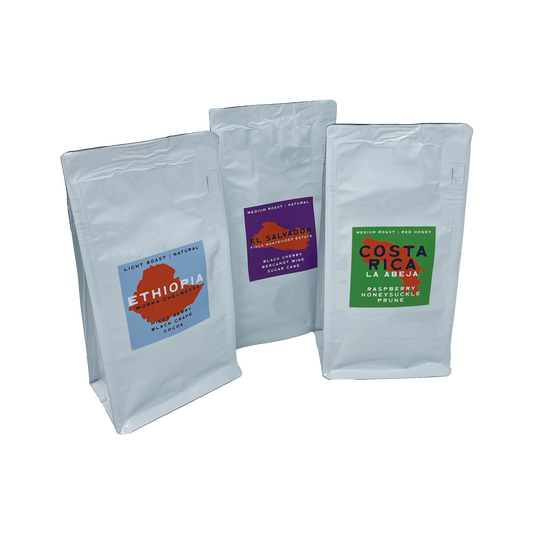

Coffee may be available every day of the year, but coffee itself is profoundly seasonal. Behind the apparent permanence of roasted beans on a cafe shelf is an agricultural cycle governed by flowering, rainfall, temperature, elevation, cherry development, labor, processing capacity, and the logistics of moving green coffee across oceans. A coffee from Ethiopia harvested in December may not reach a North American roaster until spring. A Peruvian lot harvested in July may begin appearing later in the year, while coffees from Central America are often being picked just as major South American harvest activity is changing.
Understanding these cycles reveals why specialty coffee offerings change throughout the year and why the phrase “fresh crop” matters to producers, exporters, green buyers, and roasters. Harvest season determines far more than the date cherries leave the tree. It influences labor needs, processing capacity, shipment timing, purchasing decisions, inventory age, and eventually which coffees are available to consumers. For a seasonal agricultural product, availability is inseparable from the biological calendar that produced it.
Coffee harvest seasons are often presented as tidy charts, with each country assigned several months of the year. Those calendars are useful, but they can create a false sense of precision. Coffee does not ripen according to national borders, and large producing countries can contain dramatically different elevations, rainfall patterns, microclimates, species, varieties, and flowering cycles. A farm at 900 meters may begin picking weeks or months before one at 1,800 meters in the same country, while an unusually wet or dry year can shift the entire schedule.
The most useful way to understand coffee seasonality is therefore not as a fixed timetable but as a moving global sequence. Harvest begins in one origin while another is drying coffee, another is preparing export lots, and another is experiencing the flowering that will eventually become the following crop. Understanding the broader journey from coffee species and growing environment to the finished cup helps make sense of why coffee can be continuously available even though an individual farm may harvest only once or twice each year.
What a Coffee Harvest Season Actually Means
A coffee harvest is the period when ripe coffee cherries are removed from the trees. That description sounds straightforward, but a harvest is rarely a single event. Cherries on the same farm, and sometimes even on the same branch, do not necessarily mature simultaneously. Quality-focused producers may therefore make several picking passes through the same plots, collecting ripe fruit while leaving less mature cherries on the tree.
Early passes gather the first mature cherries, peak harvest brings the greatest volume, and later passes collect fruit that ripened more slowly. The exact pattern depends on flowering uniformity, variety, rainfall, elevation, temperature, shade, plant nutrition, and numerous other agricultural conditions. Farms with highly uniform flowering may experience a comparatively concentrated harvest, while farms exposed to repeated flowering events can spend months moving through different stages of ripeness.
Harvest is also only one portion of a much longer production cycle. Coffee trees flower many months before the fruit is picked, commonly in response to rainfall following a relatively dry period. Once pollinated, the developing cherries pass through seed formation, fruit expansion, sugar accumulation, and ripening. Climate, elevation, plant genetics, water availability, tree health, and nutrition influence how quickly those processes occur.
After picking, the coffee still has a considerable journey ahead. Cherries must be processed, fermented or mechanically demucilaged where applicable, dried to a stable moisture level, rested, hulled, sorted, graded, bagged, transported, exported, shipped, cleared through customs, warehoused, sampled, purchased, and eventually roasted. The difference between harvest month and retail availability can easily be several months.
This distinction matters because the phrase “coffee season” means different things at different points in the supply chain. A producer may be thinking about the weeks when cherry is arriving at the wet mill. An exporter may be thinking about the period in which parchment is ready for milling and shipment. An importer thinks in terms of arrival periods, while a roaster experiences seasonality through the availability and condition of green coffee. These stages overlap, but they are not interchangeable.
Why Coffee Harvest Timing Changes From Place to Place
Coffee grows primarily within the tropical region commonly called the Coffee Belt, but tropical agriculture is far from climatically uniform. Rainfall can be strongly seasonal in one origin and distributed across much of the year in another. Mountainous countries can produce dramatic temperature differences across relatively short distances, while equatorial regions may experience multiple flowering events rather than one clearly defined annual bloom.
Rainfall is one of the strongest drivers of coffee phenology, the seasonal biological cycle of the plant. In many arabica-producing environments, a relatively dry period followed by sufficient rainfall can stimulate flowering. If rain arrives at a predictable time and flowers open relatively uniformly, the eventual harvest can also become relatively concentrated. If intermittent showers cause several flowering events, multiple stages of fruit development may coexist on the trees.
Elevation changes the calendar further because temperature generally decreases as elevation increases. Cooler conditions can slow cherry development, meaning higher farms commonly ripen later than lower farms within the same region. This helps explain why the microclimates and elevations of Guatemala’s coffee regions can produce noticeably different harvest windows even within one country.
Several variables can move a harvest earlier or later, or spread picking over a longer period:
-
Latitude and hemisphere influence broad rainfall and seasonal patterns.
-
Elevation and temperature affect the speed of fruit development.
-
Rainfall timing influences flowering and the eventual distribution of ripe cherry.
-
Species and variety contribute differences in physiology and maturation.
-
Slope and orientation affect sunlight exposure, temperature, and moisture.
-
Regional microclimates create different harvest windows within individual countries.
-
Drought, excessive rain, heat, and storms can disrupt established calendars.
-
Farm management and picking strategy affect how frequently workers return for ripe fruit.
These variables are why harvest calendars should always be read as approximate. Saying that Guatemala harvests between September and April does not mean every farm harvests continuously for eight months. Instead, different regions and elevations fall somewhere within that larger national window. The broad range reflects geographic diversity rather than one extraordinarily long harvest at every farm.
A Global Coffee Harvest Calendar
Broad harvest patterns remain valuable despite the need for regional nuance. Much of Central America, Mexico, Ethiopia, and other Northern Hemisphere producing areas harvest through the final months of one year and the opening months of the next. Major Southern Hemisphere origins such as Brazil and Peru become more active around the middle of the calendar year. Equatorial countries complicate the model because they may produce extended harvests or meaningful secondary crops.
The following ranges should be treated as typical windows rather than fixed agricultural deadlines:
| Origin | Typical Harvest Window |
|---|---|
| Mexico | November–March |
| Guatemala | September–April, depending heavily on region and elevation |
| Honduras | November–April |
| El Salvador | November–April |
| Nicaragua | October–March |
| Costa Rica | Highly regional; approximately July–March nationally |
| Panama | November–March |
| Colombia | Multiple regional cycles, commonly with principal and secondary harvests |
| Brazil | Approximately April–September/October depending on region and species |
| Peru | Approximately April–September, with peak activity often June–August |
| Ethiopia | October–January |
| Kenya | Main crop roughly August–January; smaller fly crop around April–July |
| Rwanda | March–June |
| Burundi | March–July |
| Tanzania | May–November depending on region |
| India | November–January |
| Sumatra, Indonesia | Broadly October–June with regional variation |
| Flores, Indonesia | Commonly May–July |
| Papua New Guinea | Main crop generally May–September, with some secondary activity |
The most important feature of this calendar is that global coffee production never truly stops. As Central America approaches the end of its picking season, coffees elsewhere are entering processing, export, or another harvest. Rwanda and Burundi become active as other Northern Hemisphere origins wind down. Brazil and Peru then move into stronger production, followed by other areas of Africa and Asia-Pacific before the cycle returns toward Ethiopia, Mexico, and Central America.
This overlapping sequence is one reason specialty roasters can maintain diverse menus throughout the year. A roaster does not necessarily need to hold twelve months of every origin in a warehouse. Instead, coffees can rotate as different harvests reach destination markets, allowing a seasonal menu to move with agricultural availability.
Central America and Mexico: A Harvest That Bridges Two Years
Central American coffee production generally accelerates through the final months of the calendar year and continues into the first quarter of the next. Flowering and fruit development commonly occur through the wetter months, while much of the harvest coincides with increasingly dry conditions. Drier weather can make cherry picking, transportation, and post-harvest drying more manageable, although each country and region has its own rainfall pattern.
The region cannot be treated as one synchronized crop. Guatemala’s harvesting activity can extend from approximately September through April because its growing zones differ greatly in elevation and climate. Lower, warmer areas tend to mature first, while higher mountain regions generally ripen later. Similar elevation-dependent timing occurs across Honduras, El Salvador, Nicaragua, Mexico, Costa Rica, and Panama.
Costa Rica provides an especially clear illustration. Turrialba and some other earlier regions can begin collecting coffee around July or August, whereas higher regions such as Tarrazú may not begin until November and can continue into March. A national harvest calendar therefore compresses multiple agricultural realities into one convenient label.
Across much of Honduras, Nicaragua, El Salvador, Mexico, and Panama, important harvesting activity falls between approximately October or November and March or April. The exact timing varies, but together these countries create one of the specialty coffee industry’s most significant sourcing periods. Achilles’ guide to Central American coffee profiles explores how neighboring origins can share certain agricultural patterns while producing dramatically different sensory expressions.
What happens immediately after picking also changes how quickly a coffee becomes available. Washed coffees move through depulping, fermentation or mucilage removal, washing, and drying, while naturals, honeys, and wet-hulled coffees follow different moisture-loss and processing pathways. A deeper understanding of washed, natural, honey, and wet-hulled coffee processing helps explain why two coffees harvested during the same week may not become export-ready at the same time.
Colombia: Why One Country Can Seem to Harvest All Year
Colombia is one of the major exceptions to simplified coffee harvest calendars. Its position near the equator, combined with three branches of the Andes, major differences in altitude, and varied rainfall patterns, allows flowering and harvesting to occur at different times across the country. Colombia does not experience one identical year-round harvest, but enough regional overlap exists that some part of the country may be collecting coffee during much of the year.
Many Colombian regions distinguish between a principal harvest and a smaller secondary crop commonly known as the mitaca or traviesa. The secondary harvest often occurs roughly six months from the principal crop, although timing and relative volume differ by department and weather pattern. In central producing areas, significant harvest activity can occur in both the April–June and September–December periods.
This creates unusual flexibility for green buyers. Rather than waiting for one nationwide annual shipment window, buyers can source coffees from different departments as their respective crops develop. That helps explain why Colombian coffee can maintain such a persistent presence in specialty inventories while still including genuinely seasonal regional and microlot offerings.
The tradeoff is complexity. A bag labeled simply “Colombia” reveals very little about its exact harvest cycle. Huila, Nariño, Cauca, Antioquia, Tolima, Caldas, Santander, and other producing areas can operate on different schedules. Serious sourcing therefore depends on understanding department, municipality, farm elevation, flowering pattern, and individual harvest information rather than assuming one national calendar.
Brazil and Peru: The Southern Hemisphere Shift
As many Northern Hemisphere crops move beyond harvest, Brazil becomes one of the defining origins of the middle portion of the year. The country’s immense geographic scale creates significant regional variation, and arabica and canephora do not follow exactly the same timetable. Broadly, however, harvesting intensifies from approximately April through September or October, with different regions entering and leaving the crop at different times.
Brazil’s harvest matters beyond specialty coffee because the country’s production scale can influence global supply, pricing, and trade expectations. The relationship between Brazilian coffee production and the wider coffee market makes crop development there unusually consequential. Weather during flowering, fruit development, maturation, and harvest can affect not only individual farms but market conditions around the world.
Harvest practices also differ greatly within Brazil. Large mechanized farms in suitable terrain can collect substantial quantities of coffee efficiently, while specialty-focused producers may separate plots, cultivars, ripeness levels, or harvest dates to protect quality. Mechanical harvesting does not inherently imply lower quality because sorting and post-harvest separation can remove immature or undesirable fruit.
Brazil’s strong natural and pulped-natural processing traditions also make drying conditions crucial. Whole-cherry naturals require substantial drying time and careful moisture management. Unexpected rainfall during harvest can increase processing pressure because producers need sufficient patios, raised beds, covered drying areas, or mechanical drying capacity to prevent undesirable fermentation and quality loss.
Peru occupies another important mid-year window. Coffee harvesting broadly extends from approximately April into September, with peak activity often falling between June and August. Mountainous geography creates familiar elevation differences: lower farms begin maturing earlier, while higher elevations can continue picking well into the season.
This timing gives Peruvian coffee an important place in seasonal purchasing programs. Fresh Peruvian lots can begin appearing as some Central American coffees have already spent several months at destination. Roasters can therefore rotate between Latin American origins rather than attempting to make one harvest remain equally vibrant indefinitely.
Ethiopia and East Africa: Several Calendars Within One Region
Ethiopia’s principal coffee harvest generally runs from approximately October through January, although elevation and region create meaningful differences. This makes Ethiopia an important late-year producing origin, yet much of the resulting coffee does not appear in North American roaster inventories until months later. Drying, milling, contracting, export preparation, shipping, and logistics all stand between cherry harvest and retail availability.
The extraordinary diversity of Ethiopian coffee makes harvest timing especially interesting. Sidama, Yirgacheffe, Guji, Jimma, Limu, Harrar, and other areas differ in elevation, ecology, production system, processing infrastructure, and local climate. Coffee may be grown in forests, semi-forest systems, gardens, estates, or smallholder plots before being delivered to washing stations or drying sites.
Harvest date can also influence the character and consistency of lots within a season. Very early picking may include a different mix of cherry maturity from peak harvest, while extremely late deliveries can encounter different weather and processing pressures. For quality-focused buyers, knowing when a lot was picked can therefore add context beyond simply knowing that it came from the current Ethiopian crop.
Kenya follows a distinctive pattern with a larger main crop and a smaller fly crop. The main harvest broadly spans late summer through the beginning of the following year, while a secondary harvest occurs around the middle of the calendar year. This second crop complicates the idea that every coffee-producing country has one annual picking period.
Farther south, Rwanda and Burundi generally begin harvesting during the first part of the year. Rwanda’s main season commonly runs from approximately March through June, while Burundi can extend from around March into July. Flowering rains and yearly weather conditions can move those windows, sometimes causing meaningful differences from one crop to the next.
Tanzania extends the East African calendar even further. Producing zones in the south can begin harvesting around May, while northern areas may continue later into the year. “East African harvest season” is therefore almost as imprecise as “Latin American harvest season.” What exists instead is a progression of regional crops that supplies fresh coffee at different points throughout the year.
Indonesia and Asia-Pacific: Why National Calendars Become Less Useful
Indonesia demonstrates especially clearly why national harvest calendars can conceal more than they reveal. The country consists of thousands of islands spread across multiple climatic systems, and coffee production differs sharply between Sumatra, Java, Sulawesi, Bali, Flores, Papua, and other areas. Rainfall patterns are often less neatly divided into one wet and one dry season than in parts of Central America, which can create extended or multiple picking periods.
Sumatra can have a particularly broad harvest range, with meaningful activity occurring from approximately October through June depending on region. Other islands follow different patterns. Flores, for example, often has a more concentrated crop around May through July. These differences are one reason Indonesian coffee is better understood as a collection of distinct regional systems than as one national coffee profile.
Processing creates another layer of seasonality. Sumatra is strongly associated with wet-hulling, or giling basah, a system in which parchment is removed while the coffee retains considerably more moisture than fully dried export-ready green coffee. The method evolved within a humid production environment and local supply chain where moving coffee efficiently can be economically important.
Papua New Guinea typically produces a primary crop around May through September, although some regions have additional activity at other times. India’s main coffee harvest tends to occur late in the calendar year. Vietnam, the world’s dominant producer of Coffea canephora, also carries substantial late-year harvest activity, though regional climate and rainfall continue to affect annual timing.
The practical lesson is that Asia-Pacific sourcing cannot be understood through hemisphere alone. Island geography, monsoon patterns, species, altitude, rainfall distribution, and post-harvest traditions create very different calendars within relatively close geographic areas.
Harvest Date Is Not the Same as Fresh-Crop Arrival
One of the most persistent misconceptions in specialty coffee is that coffee should appear at a roastery immediately after harvest. A freshly picked coffee cherry is nowhere near ready to enter an international roaster’s inventory. It is a perishable fruit surrounding seeds that contain too much moisture to remain stable during long-term storage and international shipment.
After harvest, the fruit must first be processed. Washed coffees need depulping, fermentation or mechanical mucilage removal, washing where applicable, and controlled drying. Natural coffee dries with the fruit intact. Honey processes retain varying amounts of mucilage. Wet-hulled coffee follows another route entirely. Regardless of method, moisture must ultimately be reduced enough for the green seed to become reasonably stable.
Coffee may then rest in parchment or dried cherry before final dry milling. Resting allows moisture to equilibrate and can make later handling more predictable. Dry mills remove parchment or dried fruit material and use combinations of screens, density equipment, optical sorters, hand sorting, and defect removal to prepare export lots.
Only then does international logistics begin. Coffee may travel from a remote mountain area to a cooperative or mill, from there to an exporter’s warehouse, and eventually by truck to a port. Containers must be scheduled, loaded, transported across an ocean, cleared through customs, moved to an importer’s warehouse, sampled again, sold or released against a contract, and delivered to the roaster.
The path commonly includes:
-
Cherry harvesting and delivery to a mill or processing site.
-
Processing, fermentation where applicable, and drying.
-
Resting in parchment or dried cherry.
-
Dry milling, grading, sorting, and export preparation.
-
Pre-shipment sampling and buyer approval.
-
Inland transportation and port handling.
-
Ocean freight and customs clearance.
-
Arrival sampling, warehousing, and delivery to the roaster.
This is why harvest calendars and arrival calendars are fundamentally different. Ethiopian coffee picked from October through January may become especially prominent in North American roaster inventories during the spring and summer. Central American coffees harvested during winter frequently arrive from spring onward. Peruvian coffees picked through the middle of the year become increasingly available later in the year.
The broader journey from farm to cup is therefore measured in months rather than days. When a specialty roaster describes coffee as fresh crop, the phrase typically refers to green coffee from the most recent relevant harvest that has moved through processing and logistics while retaining the vibrant sensory characteristics expected from properly handled recent-crop material.
Does Fresh Crop Always Taste Better?
Fresh crop is generally desirable because green coffee changes during storage. Aromatic potential can fade, moisture shifts, lipids oxidize, and other chemical changes gradually alter sensory quality. Coffees that age poorly may develop woody, papery, baggy, muted, or faded characteristics. In high-quality lots prized for floral aromatics, bright acidity, or transparency, the difference can become particularly noticeable.
Freshness should not be reduced to a fixed expiration date, however. Green-coffee aging depends on the original coffee, processing quality, moisture, water activity, packaging, storage temperature, warehouse humidity, oxygen exposure, transportation, and handling. Modern hermetic or high-barrier liners can protect green coffee significantly better than traditional porous jute used alone.
Some coffees remain vibrant for surprisingly long periods under good conditions, while others begin losing distinction relatively quickly. A delicate floral coffee may reveal aging sooner than a lower-acidity, chocolate-heavy profile even if both remain technically sound. Roasters therefore evaluate coffee sensorially instead of making purchasing decisions from harvest dates alone.
Nor does “fresh crop” mean that coffee should be exported before it has properly stabilized. Poorly dried coffee rushed through the supply chain is not superior merely because it is younger. Drying and resting are critical post-harvest steps. A carefully prepared coffee that has stabilized appropriately can outperform a more recently harvested lot that was processed or stored badly.
The best green buyers combine crop information with physical and sensory evaluation. Harvest timing provides context, but the cup remains the final test.
Harvesting Decisions Directly Affect Coffee Quality
Harvest season determines availability, but it is also one of the points at which potential quality can be protected or lost. Coffee cherries undergo substantial physical and chemical changes as they mature. Sugars accumulate, acids evolve, fruit color changes, and the seeds reach physiological maturity. The difference between ripe and immature fruit can become obvious later during roasting and cupping.
Harvesting too early introduces underdeveloped fruit into the lot. Seeds from immature cherries can contribute vegetal, cereal-like, peanut-like, thin, or astringent characteristics and may roast differently from properly developed beans. Overripe fruit presents another set of risks because extended time on the tree or ground can encourage uncontrolled fermentation, microbial activity, or drying before processing.
Selective hand picking allows workers to collect mature cherries and leave unripe fruit for a later pass. The method is labor intensive because a worker may return to the same coffee trees several times. On steep mountain farms where mechanization is impossible, the labor requirement can become one of the greatest costs of producing high-quality coffee.
Mechanical harvesting changes the economic equation in landscapes suitable for machinery. Modern harvesters can collect enormous quantities efficiently, and producers can use float tanks, density separation, optical sorting, and other technologies afterward to separate fruit by maturity or physical condition. Mechanized harvesting is therefore not inherently incompatible with specialty quality. The outcome depends on ripeness distribution, machine calibration, sorting systems, and the producer’s quality objectives.
Peak harvest also creates substantial infrastructure pressure. A mill that handles moderate cherry deliveries easily in the early season may suddenly receive many times that volume during peak ripeness. Fermentation tanks, depulpers, dryers, patios, raised beds, water systems, storage space, vehicles, and labor can all become bottlenecks.
This is why excellent coffee production is partly a logistical achievement. Producing ripe fruit is not enough; farms and mills need the capacity to process that fruit quickly and consistently when the crop reaches its peak.
Climate Variability Is Making Coffee Calendars Less Predictable
Traditional coffee harvest calendars are based on patterns observed over many seasons. Those patterns remain useful, but producers in many regions are dealing with increasingly erratic rainfall, temperature, and extreme weather. A calendar that accurately represented an origin twenty years ago may still describe the broad season today while failing to predict the exact start, concentration, or duration of a particular harvest.
Irregular rainfall can create scattered flowering rather than one concentrated bloom. Several separate flowering events can translate into several separate ripening periods months later, increasing the number of picking passes producers need to make. Drought can reduce flower or fruit development, while excessive rain during harvest may interfere with picking and drying.
Heat introduces another challenge. Higher temperatures can accelerate aspects of fruit development and increase water stress, particularly at lower elevations. At the same time, heat combined with rainfall changes can increase pest or disease pressures in some environments. The resulting effects are not uniform, but they make crop forecasting more complicated.
The consequences extend far beyond moving a harvest date. A late crop changes when seasonal labor is needed, when processing facilities must operate at peak capacity, when exporters need financing, and when contracts can be fulfilled. If neighboring regions that ordinarily peak at different times begin ripening simultaneously, they may compete for the same workers.
A more extended harvest can create different economic pressure. Mills may need to remain open longer while receiving smaller daily quantities, potentially increasing operating costs. Exporters and buyers may receive samples later than expected, while roasters waiting for contracted coffee may need to extend inventory from the previous crop.
For this reason, professional green buying increasingly requires real-time communication with origin. Last year’s calendar provides a framework, but information about current flowering, rainfall, cherry development, harvest progress, drying conditions, and shipment schedules is far more valuable when making actual purchasing decisions.
What Coffee Seasonality Means for Roasters
For specialty roasters, understanding coffee harvest seasons is fundamental inventory management. A buyer deciding how much Ethiopian, Guatemalan, or Peruvian coffee to purchase must think beyond current sales volume. The buyer needs to estimate how long the coffee will remain desirable in green storage, how quickly it will be consumed, when the following crop is likely to become available, and whether another origin can occupy that menu position in the interim.
Buying too little creates the risk of running out before a replacement is ready. Buying too much can be equally damaging if the final portion of the inventory has lost the clarity and vibrancy that justified purchasing the coffee in the first place. Seasonal sourcing is therefore partly about matching inventory velocity to crop cycles.
This is especially important for high-end single-origin and microlot coffees. A small lot may exist in only a few bags, and there is no mechanism for simply ordering an identical replacement six months later. Once the producer’s harvest has been sold, that particular coffee is finished until the following crop—and the next crop will never be chemically or sensorially identical.
Seasonality can become a strength rather than an inconvenience. A roaster can move through different origins as they reach favorable availability instead of treating a permanent menu as the only sign of consistency. Central American coffees may become prominent following their new-crop arrivals, East African coffees can rotate in as their exports become available, and Southern Hemisphere coffees can occupy later positions in the calendar.
Colombia’s multiple regional crops add another layer of flexibility. Brazil, Peru, Ethiopia, Indonesia, and smaller origins can each occupy different seasonal roles depending on the roaster’s sourcing relationships and flavor goals. A thoughtful green program is therefore less like maintaining a static pantry and more like managing an agricultural portfolio.
What Seasonality Means for Coffee Drinkers
For consumers, the disappearance of a favorite single-origin coffee can initially seem frustrating. Specialty coffee has trained customers to care about producer, region, variety, process, and flavor, which naturally creates attachment to specific lots. Yet the very characteristics that make a coffee distinctive are also what make it finite.
A microlot represents a particular harvest from a particular place. Once those cherries have been picked, processed, exported, and roasted, no additional coffee from that harvest can be manufactured. The farm must flower again, grow another crop of cherries, harvest them, and move through the entire post-harvest process before a comparable coffee exists.
Even then, the following harvest will not taste precisely the same. Rainfall may differ. Temperatures may have changed. Flowering may be more concentrated or dispersed. The producer may alter fermentation or drying. Trees may be one year older, pruning cycles may shift, and harvest ripeness can vary.
That variability is not a failure of specialty coffee. It is one of the clearest reminders that coffee is agriculture rather than an industrial flavor formula. Consistency can be created within sensible limits, but an individual farm cannot produce an identical crop indefinitely.
Learning the coffee harvest calendar therefore changes how single-origin coffee is understood. Origin is not simply a permanent flavor category printed on packaging. It represents a specific place, season, crop, processing system, and moment in agricultural time.
Coffee Is Available Year-Round Because Harvests Are Not
The apparent contradiction at the center of global coffee is that an intensely seasonal crop supports an industry operating every day of the year. This is possible because coffee-producing regions are distributed across different hemispheres, latitudes, elevations, rainfall systems, and microclimates. One origin can be flowering while another is harvesting; one is drying while another is shipping; another has just reached an importer while fruit for the next crop is developing somewhere else.
Understanding that cycle makes the idea of freshness more meaningful. Coffee freshness does not begin only when roasted coffee comes out of the roaster. The quality available at that stage depends on ripe fruit, careful harvesting, appropriate processing, controlled drying, stable green storage, responsible transportation, and purchasing decisions made in relation to the crop calendar.
For producers and exporters, harvest timing is an agricultural and operational framework. For green buyers, it determines when samples, contracts, and fresh-crop arrivals become available. For roasters, it becomes an inventory and quality-control system. For coffee drinkers, it explains why the most interesting single-origin menus change throughout the year and why exceptional coffees are often temporary by nature.
Coffee can be brewed every morning, but every cup begins with a harvest that took place somewhere, under particular climatic conditions, during a specific moment in the agricultural year. Following that seasonal cycle does not make coffee less consistent. It makes the relationship between the farm and the cup considerably easier to understand.