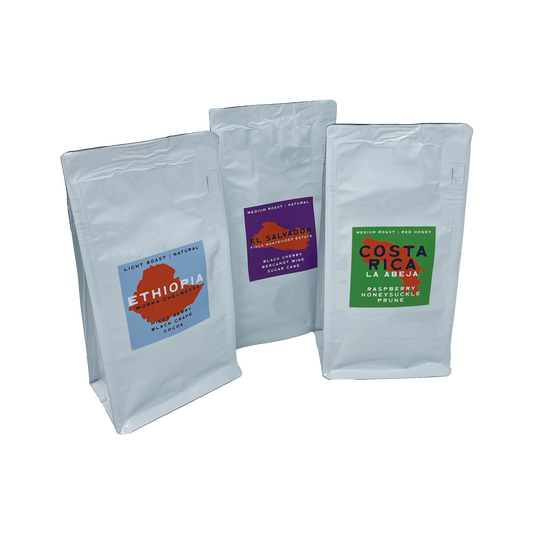

Green coffee does not taste like the beverage most people recognize as coffee. Before roasting, the seed is dense, pale, grassy, and only faintly aromatic. It contains the raw materials for flavor, but not the familiar notes of caramel, chocolate, toasted nuts, fruit, spice, or roast that emerge in the cup. Those qualities are created, altered, and sometimes destroyed through the controlled application of heat.
Roasting is often described as a cooking process, but that comparison only captures part of what happens. A coffee roaster is managing a sequence of overlapping physical and chemical transformations inside a seed that is changing by the second. Water evaporates, cellular pressure rises, sugars react with amino acids, acids break down, gases form, aromatic molecules volatilize, and the bean’s internal structure becomes increasingly porous. By the end of the roast, the coffee has lost a substantial portion of its original mass while gaining hundreds of volatile compounds that define its aroma and flavor.
The complexity of roasting comes from the fact that these reactions do not occur independently. Heat transfer affects moisture movement, moisture affects reaction rates, density influences energy absorption, and the chemical composition of the green coffee limits what the roast can create. A roaster cannot manufacture flavors that were never present in the raw material, but the roast profile determines whether the coffee’s potential becomes vivid, muted, balanced, or overwhelmed by roast character.
Understanding the chemistry of coffee roasting helps explain why light and dark roasts taste different, why the same coffee can change dramatically under different profiles, and why roasting is not simply a matter of making beans darker. It also reveals why apparently small decisions about heat, airflow, time, and development can have major consequences in the cup. Roasting transforms coffee by reorganizing its chemistry, and flavor is the sensory record of that transformation.
Green Coffee as a Chemical Starting Point
Before roasting begins, green coffee already contains a highly complex mixture of chemical compounds. Its composition reflects species, variety, growing conditions, ripeness, processing, drying, storage, and age. Arabica and Robusta differ chemically, as do washed and natural coffees, high-elevation and low-elevation coffees, and freshly harvested and poorly stored lots. Roasting develops flavor from this starting material, which is why two coffees exposed to the same roast profile will not taste the same.
Green coffee is primarily made up of carbohydrates, including cellulose, hemicellulose, sucrose, and other polysaccharides. It also contains proteins, amino acids, lipids, chlorogenic acids, minerals, caffeine, water, and a range of minor compounds that act as flavor precursors. Many of these substances do not taste pleasant in their raw state, but they participate in reactions that generate desirable aromas and flavors during roasting.
Sucrose is especially important because it contributes to sweetness and participates in caramelization and other thermal reactions. Amino acids and reducing sugars support Maillard chemistry, while chlorogenic acids influence acidity, bitterness, and astringency. Lipids help retain aromatic compounds and contribute to texture, especially in espresso and metal-filtered brewing. The coffee’s moisture content affects how heat moves through the bean and how quickly internal pressure develops.
The quality of green coffee therefore sets the boundaries of the roast. Roasting can clarify sweetness, enhance aromatic complexity, and improve solubility, but it cannot erase every defect. Phenolic, moldy, fermented, baggy, or faded characteristics often survive roasting because they originate in poor cultivation, processing, drying, or storage. A technically skilled roast can present a coffee honestly and effectively, but it cannot turn damaged green coffee into exceptional coffee.
Density, Moisture, and Heat Absorption
Bean density strongly influences roast behavior. Coffees grown at higher elevations often develop denser cellular structures because cherries mature more slowly under cooler conditions. Dense beans can tolerate and sometimes require greater energy early in the roast to penetrate the seed effectively. Softer, lower-density coffees may respond better to gentler energy application because excessive heat can damage the exterior before the interior develops evenly.
Moisture content also changes the way a coffee absorbs and transfers heat. Green coffee commonly arrives at the roastery with moisture levels near the range considered stable for storage, though the exact value varies. Water absorbs a significant amount of energy as it heats and evaporates, so wetter coffees may initially respond more slowly than drier coffees. However, moisture is not merely an obstacle; it also helps carry heat through the bean and supports internal pressure development.
Water activity, which describes how available water is for chemical and biological processes, provides additional information beyond total moisture content. Two coffees may contain similar amounts of water but behave differently because that water is bound differently within the seed. Roasters increasingly use moisture and water-activity measurements to better predict roast behavior, reduce inconsistency, and evaluate green coffee stability.
These physical properties matter because roasting is never performed on chemistry alone. The bean is a structured biological material, and heat must move through that structure before chemical reactions can proceed evenly. Roast development depends on the interaction between the coffee’s composition and the way energy reaches its center.
The First Stage: Heating and Drying
The earliest stage of roasting is dominated by heat absorption and moisture movement. When room-temperature green coffee enters a hot roasting chamber, the temperature of the system drops as the beans absorb energy. The coffee initially smells grassy, vegetal, or hay-like because the compounds associated with roasted coffee have not yet formed in significant concentrations.
Roasters often call this period the drying phase, although the name can be misleading. Moisture continues leaving the bean throughout much of the roast, not only during the opening minutes. What makes the early stage distinctive is that a large proportion of the incoming energy is devoted to heating water and driving it outward from the seed.
As the coffee warms, free and more weakly bound water begins to evaporate. Steam migrates through the cellular structure, and internal pressure gradually increases. The beans shift from green toward pale yellow as chlorophyll breaks down and early browning reactions begin. Their aroma often moves from fresh vegetation toward cereal, bread, or toasted grain.
The major events of this stage can be summarized as follows:
-
The beans absorb heat from the roasting environment.
-
Moisture migrates from the interior toward the surface.
-
Green and grassy aromas begin to diminish.
-
The seed’s color changes from green to yellow.
-
Internal pressure rises as water becomes steam.
-
Early flavor-forming reactions begin before visible browning is complete.
These steps overlap rather than occurring as isolated checkpoints. A roast that applies too little energy early may struggle to build sufficient momentum later, potentially extending the roast and flattening flavor. Excessive early heat can create scorching, tipping, or uneven development, especially in softer coffees. The roaster’s task is to apply enough energy to move the coffee through drying efficiently without damaging the bean’s surface.
Why Drying Influences Later Flavor
The drying stage affects every phase that follows because it establishes the coffee’s thermal momentum. If energy is poorly managed early, the roaster may need to compensate later with aggressive heat, which can distort development. A slow, underpowered beginning may also lengthen total roast time and contribute to muted acidity, dull sweetness, or a baked character.
At the same time, rapid drying is not always desirable. Driving moisture out too aggressively can produce uneven heat distribution between the exterior and interior of the bean. The outside may advance into browning reactions while the center remains comparatively underdeveloped. This imbalance can create coffee that appears properly roasted but tastes vegetal, sharp, or structurally incomplete.
Roasters therefore consider drying in relation to bean density, batch size, moisture, processing method, and machine design. A dense washed coffee may need a different energy strategy than a lower-density natural coffee. The goal is not to hit a universal drying time but to move the specific coffee into browning with enough internal energy for controlled development.
The Maillard Reaction and the Creation of Roasted Flavor
The Maillard reaction is one of the most important families of chemical reactions in coffee roasting. It occurs when reducing sugars react with amino acids under heat, producing a wide range of intermediate compounds and brown-colored polymers. Although it is often discussed as a single reaction, it is actually a network of pathways that generate many of the aromas and flavors associated with cooked and roasted foods.
In coffee, Maillard chemistry contributes to notes resembling toasted bread, nuts, cocoa, malt, roasted grain, and savory sweetness. It also plays a major role in color development and the formation of melanoidins, the complex brown compounds that influence body, flavor, antioxidant behavior, and brew color. The exact products depend on temperature, time, moisture, pH, and the chemical composition of the coffee.
The Maillard reaction becomes increasingly active as the coffee moves beyond the yellowing stage and begins turning brown. Roasters often refer to this portion of the roast as the browning phase. Aromas become sweeter and more familiar, shifting toward bread crust, toasted nuts, and caramelized foods. The beans expand, lose more water, and become progressively more porous.
Amino Acids, Sugars, and Aroma Precursors
Different amino acids and sugars can lead to different aromatic outcomes. For example, Maillard-derived chemistry contributes to the formation of pyrazines, which can produce roasted, nutty, earthy, or cocoa-like aromas. Furans may contribute sweet, caramel-like, bready, or roasted notes, while aldehydes and ketones can add malty, fruity, buttery, or floral dimensions.
These compounds are powerful because aroma perception depends on concentration and interaction. A molecule does not need to be present in large amounts to have a sensory effect if its odor threshold is low. Coffee aroma is therefore not determined simply by which compounds exist, but by their relative proportions and the way the human sensory system interprets them together.
A coffee’s green chemistry shapes which reaction pathways are available. A ripe, well-processed coffee with abundant sugars and well-preserved precursors may produce greater sweetness and aromatic complexity than an underripe or poorly stored coffee. Processing also matters because fermentation and drying can alter precursor composition before roasting begins.
Roast profiling changes how these precursors are used. Extending browning may increase certain roast-derived aromas and deepen body, but excessive time can reduce liveliness and mute origin character. Moving too quickly through the phase may preserve brightness but leave sweetness and structural development incomplete. The best balance depends on the coffee and the intended brewing method.
Caramelization and Sugar Degradation
Caramelization is frequently mentioned alongside the Maillard reaction, but the two processes are chemically different. Caramelization involves the thermal decomposition of sugars without requiring amino acids. As sucrose and related compounds break down, they generate products associated with sweetness, caramel, toast, bitterness, and color.
Coffee roasting does not create caramelization in the same controlled way as heating pure sugar in a pan because the bean is a complicated matrix containing water, acids, proteins, minerals, and structural carbohydrates. Nevertheless, sugar degradation contributes significantly to flavor development. Sucrose declines as roasting progresses, and the compounds formed from its breakdown help shape both sweetness and roast character.
A common misconception is that darker roasting makes coffee sweeter because more caramelization occurs. Perceived sweetness often increases during early and intermediate development as raw, vegetal qualities diminish and sweet aromatic compounds form. However, as roasting continues, more sugars are degraded, and bitterness, carbonization, and smoky notes become increasingly dominant. A dark roast may smell caramelized while containing less residual sugar and tasting less intrinsically sweet than a well-developed lighter roast.
Caramelization and Maillard chemistry overlap in the sensory experience even though their mechanisms differ. Both contribute brown color and cooked aromas, and both interact with acid degradation, volatile formation, and structural change. Roasters do not control them separately with a single setting; they manage the overall heat environment in which these reactions proceed.
Acid Transformation During Roasting
Green coffee contains several families of organic acids, and roasting changes them dramatically. Some acids degrade, some are transformed into other compounds, and some are created during thermal reactions. These shifts influence brightness, fruit character, bitterness, astringency, and the overall balance of the cup.
Citric and malic acids are commonly associated with citrus-like and apple-like acidity in coffee. Their sensory expression depends on concentration, roast level, brewing, and the presence of sweetness and aroma. These acids generally become less prominent as roast development increases, which is one reason lighter roasts often taste brighter than darker roasts.
Chlorogenic acids are among the most abundant acid-related compounds in green coffee. During roasting, they break down into products that can contribute bitterness and astringency. Moderate degradation is part of normal flavor development, but greater roast intensity can increase the influence of certain bitter degradation products before those compounds themselves decompose further at very dark levels.
Acetic acid may also be present or formed during roasting, and in small concentrations it can contribute brightness and complexity. At higher concentrations, it can smell vinegary or sharp. Processing method influences the acid profile entering the roaster, which helps explain why washed, honey, natural, and fermented coffees may behave differently under similar roast conditions.
Acidity Is Not Simply Destroyed
It is tempting to say that roasting merely reduces acidity, but the process is more nuanced. Certain acids decline, others become more noticeable, and the sensory perception of acidity changes as sweetness, bitterness, aroma, and body evolve. A coffee can contain measurable acids yet taste dull if sweetness and aromatic clarity are poorly developed.
Roast degree also affects which kind of acidity the drinker perceives. Light roasts may preserve more origin-linked fruit acidity, but insufficient development can produce sourness that feels green or unbalanced. Medium roasts often present acidity with greater sweetness and roundness, while dark roasts usually suppress fruit-like brightness in favor of roast-derived bitterness and heavier body.
The distinction between acidity and sourness is essential. Acidity is a structural quality that can make coffee taste lively, juicy, and articulate. Sourness describes an unpleasant imbalance that may come from underdevelopment, under-extraction, insufficient sweetness, or an unsuitable brew recipe. Roasting shapes the potential for acidity, but brewing determines how that potential is expressed.
First Crack: Pressure, Expansion, and Structural Change
As roasting progresses, the coffee reaches a point where internal pressure becomes strong enough to rupture parts of the cellular structure. This produces the audible event known as first crack. It is often compared with popcorn, though the sound is usually softer and more irregular.
First crack is not a single chemical reaction. It is a physical response to accumulated heat, steam pressure, carbon dioxide formation, and weakening cell walls. By this stage, the beans have expanded considerably, lost substantial moisture, and developed many of the aromatic compounds associated with roasted coffee.
Roasters use first crack as an important reference point because it signals a major transition in the roast. The coffee is becoming structurally fragile, increasingly porous, and more reactive. Heat management becomes especially important because the roast can accelerate as exothermic reactions and changing bean properties alter the system’s behavior.
Several major changes are occurring around first crack:
-
Cellular walls rupture as internal pressure rises.
-
Carbon dioxide and water vapor escape more rapidly.
-
Bean volume expands while density decreases.
-
Aromatic compounds continue forming and volatilizing.
-
The coffee becomes more soluble and physically brittle.
-
The risk of uncontrolled acceleration or stalling increases.
The timing and character of first crack provide useful information, but they do not determine quality on their own. A loud crack does not guarantee proper development, and a quiet crack does not necessarily indicate failure. Bean size, density, moisture, process, batch size, and roaster acoustics all affect how the event sounds.
Development After First Crack
The period after first crack is often called development time, although chemical development has been occurring throughout the entire roast. This stage receives special attention because small changes can have large sensory consequences. The coffee is close to its final color and structure, yet acids, sugars, aroma compounds, and roast flavors are still evolving rapidly.
Too little post-crack development may produce coffee that tastes grassy, cereal-like, sour, or hollow. The exterior may appear roasted while the interior remains insufficiently transformed. Too much development can flatten acidity, reduce aromatic distinction, and create excessive bitterness or roast dominance.
Roasters sometimes compare development time as a percentage of total roast duration, but no single percentage guarantees quality. The same number can represent very different thermal conditions on different machines or with different coffees. Development must be evaluated in the context of energy application, rate of rise, color, density, intended brew method, and sensory results.
Volatile Aromatic Compounds
Roasted coffee contains hundreds of volatile compounds, many of which contribute to aroma. These molecules include furans, pyrazines, aldehydes, ketones, phenols, sulfur compounds, esters, and many others. Together they create the aromatic complexity that makes freshly roasted coffee smell recognizable and compelling.
Some volatiles contribute sweet or caramel-like aromas, while others suggest nuts, fruit, flowers, smoke, spice, earth, or roast. Sulfur-containing compounds are especially important because they can have extremely low odor thresholds. In carefully balanced concentrations, they contribute the characteristic aroma of coffee; at higher or imbalanced levels, they may appear onion-like, cabbage-like, rubbery, or harsh.
The volatile profile changes continuously during roasting. Some compounds form early and later degrade, while others appear only at higher temperatures. Prolonged or aggressive roasting may destroy delicate fruit and floral compounds while increasing smoky, spicy, or bitter roast notes. This helps explain why light roasts often emphasize origin character and dark roasts emphasize the flavor of the roasting process itself.
Aroma formation also involves loss. Volatile compounds begin escaping from the bean during roasting and continue leaving after the roast ends. The roaster must create enough aromatic complexity while avoiding unnecessary destruction. Cooling the coffee quickly after discharge is therefore essential because beans that remain hot continue reacting even after leaving the roasting chamber.
Carbon Dioxide and Degassing
Carbon dioxide is produced during roasting as carbohydrates and other compounds break down. Much of this gas becomes trapped within the porous cellular structure of the roasted bean. After roasting, it gradually escapes in a process known as degassing.
CO₂ affects freshness, packaging, espresso extraction, bloom behavior, and flavor stability. Very fresh coffee can release enough gas during brewing to interfere with even water contact, particularly in pour-over and espresso. This is why coffee often benefits from a resting period after roasting, although the ideal duration depends on roast level, brewing method, packaging, and the coffee itself.
Darker roasts generally degas more rapidly because their cellular structure is more expanded and fractured. Lighter roasts are denser and may retain gas longer. Espresso often benefits from a longer rest than filter coffee because trapped gas can destabilize flow and reduce extraction consistency under pressure.
Degassing should not be confused with staling. Releasing some carbon dioxide can improve brewing, but oxygen exposure gradually degrades aroma and flavor. Good packaging uses one-way valves to allow gas to escape while limiting oxygen entry. Freshness management is therefore a balance between allowing the coffee to settle and protecting it from oxidation.
How Roast Level Changes Coffee Chemistry
Roast level is not merely a color category. It represents the cumulative effect of heat and time on the coffee’s chemistry and structure. Light, medium, and dark roasts differ because different amounts of precursor compounds have been transformed, degraded, or volatilized.
Light roasts usually preserve more organic acids, origin-linked aromatics, and variety-specific character. They retain greater density and may be less soluble, which means brewing often requires finer grinding, hotter water, longer contact, or more agitation. When roasted and brewed well, they can express florals, fruit, tea-like structure, and transparent acidity.
Medium roasts typically balance origin character with greater sugar browning, body, and solubility. Acidity becomes rounder, sweetness often becomes easier to perceive, and flavors may move toward caramel, chocolate, ripe fruit, and nuts. This broad balance makes medium roasts adaptable to both filter coffee and espresso.
Dark roasts undergo more extensive degradation. Acidity and delicate aromatics decline, oils may migrate toward the surface, and flavors increasingly reflect smoke, carbon, bitter chocolate, spice, and roast. Solubility rises, so dark roasts can extract quickly and become bitter or drying if brewed too aggressively.
Roast level should therefore be understood as a chemical tradeoff. Greater development can improve solubility, body, and roast sweetness, but it may reduce floral clarity and origin distinction. Less development can preserve nuance but demands greater precision from both roaster and brewer.
Processing Method and Roast Chemistry
Processing changes the composition of green coffee before it reaches the roaster. Washed coffees have most fruit material removed before drying, while natural coffees dry inside the cherry. Honey and pulped-natural processes retain varying amounts of mucilage, and experimental fermentation methods can further alter acids, sugars, and aromatic precursors.
Washed coffees often present greater clarity and more defined acidity. Their cleaner precursor profile may allow roasters to emphasize florals, citrus, and structured sweetness. Naturals often contain more fruit-forward and fermentation-derived character, which can become intensely aromatic but may also scorch or develop unevenly if handled too aggressively.
Natural coffees can behave differently in the roaster because density, moisture distribution, sugar composition, and bean surface characteristics may differ from washed coffees. They sometimes benefit from more measured energy application, especially when they are lower in density or contain more variable seed structures. However, there is no universal rule that all naturals should be roasted gently or all washed coffees aggressively.
Modern fermentation techniques complicate roast chemistry further. Anaerobic, carbonic, thermal-shock, and inoculated processes can create unusual precursor profiles that produce highly expressive aromas. Roasters must determine whether to preserve those characteristics, balance them with sweetness, or reduce excessive ferment intensity.
Roasting Defects as Chemical and Physical Failures
Roasting defects occur when heat transfer and reaction development become unbalanced. Some defects are visible, while others appear primarily in flavor. Understanding them requires looking at both the bean’s surface and its internal chemistry.
Scorching occurs when the bean surface receives excessive conductive heat, producing dark patches and burnt flavors. Tipping affects the ends of the bean, where structural weaknesses and heat concentration can create small burned areas. Facing describes broader surface damage, often associated with excessive environmental temperature or poor heat control.
Baking is less visible and often more controversial in definition. It generally describes coffee that tastes flat, bready, dull, or lacking in sweetness and acidity after spending too long in an underpowered thermal environment. The roast may reach an acceptable color, but the progression of reactions lacks enough energy to create vivid flavor.
Underdevelopment occurs when the coffee’s internal structure and chemistry have not transformed sufficiently. It can produce grassy, peanut-like, cereal, sour, or astringent flavors. Dark color alone does not guarantee internal development, which is why rapidly roasting the exterior can create coffee that appears finished but tastes raw.
These defects show why roast analysis cannot rely on a single metric. Color, time, temperature, rate of rise, weight loss, aroma, density, and cupping results all provide partial information. The final authority is sensory evaluation supported by repeatable roast data.
Roasting, Solubility, and Brewing
Roasting changes how easily coffee dissolves during brewing. As heat expands and fractures the bean, its cellular structure becomes more porous. Complex compounds break down, moisture decreases, and the roasted seed becomes brittle enough to grind.
Darker roasts are generally more soluble because they have undergone greater structural and chemical degradation. They often require less aggressive extraction to avoid bitterness and dryness. Lighter roasts are denser and less soluble, so they may require more extraction energy through grind size, temperature, contact time, or agitation.
This relationship explains why one brew recipe cannot work equally well for every roast. A light roast brewed with cool water and a coarse grind may taste sour and weak because extraction is incomplete. A dark roast brewed with very hot water and a fine grind may become bitter, smoky, and drying because extraction proceeds too quickly.
Roasting also changes body. Melanoidins, lipids, dissolved solids, and fine particles all influence mouthfeel. Medium and darker roasts often appear fuller because they extract readily and emphasize roast-derived compounds, while lighter roasts may feel tea-like, silky, or juicy when brewed well. Body is therefore created through both roast chemistry and brewing technique.
The Roaster’s Real Objective
The purpose of roasting is not to maximize one reaction or produce the darkest possible color. It is to guide a specific coffee toward a coherent sensory expression. That may mean preserving jasmine and citrus in a washed Ethiopian coffee, developing chocolate and caramel in a Brazilian coffee, or building enough structure for a Colombian coffee to perform well as espresso.
Every roast involves tradeoffs. Preserving acidity may reduce body if development is too limited. Increasing caramelized character may mute florals. Extending the roast may improve solubility but reduce aromatic intensity. The roaster must decide which qualities deserve emphasis and how the coffee will be brewed.
This is why roast profiling is both technical and sensory. Data helps the roaster repeat a process, diagnose inconsistencies, and understand machine behavior. Cupping reveals whether the chemical transformation produced sweetness, clarity, balance, and finish. Neither data nor tasting is sufficient alone.
A successful roast does not draw attention only to itself. It allows the coffee’s origin, variety, processing, and intended use to remain intelligible. The chemistry should feel integrated rather than obvious, producing a cup in which acidity, sweetness, bitterness, aroma, and body support one another.
Final Thoughts
Coffee roasting transforms a hard, grassy seed into one of the most chemically complex beverages people consume. Heat drives off water, weakens cellular structures, generates pressure, breaks down acids, transforms sugars, and creates hundreds of aromatic compounds. Maillard reactions, caramelization, acid degradation, gas formation, and structural expansion occur simultaneously, each influencing the others.
The visible change from green to brown is only the surface evidence of a much deeper transformation. Inside the bean, flavor precursors are being rearranged into compounds that may smell like fruit, flowers, nuts, cocoa, caramel, spice, smoke, or toast. Some reactions create desirable complexity, while others can produce bitterness, astringency, or burnt character when pushed too far.
Roast level changes the balance between origin expression and roast expression. Lighter roasting generally preserves more acidity and delicate aroma, while darker roasting increases solubility, bitterness, and roast-derived flavor. Neither approach is inherently superior; each must suit the coffee, the brewing method, and the intended sensory result.
The chemistry of roasting explains why skilled roasting is not simply a matter of following temperature milestones. Green coffee composition, density, moisture, processing, machine design, airflow, heat application, and development all affect the final cup. The roaster’s craft lies in understanding these variables well enough to transform potential into flavor without obscuring what makes the coffee distinctive.
Once roasting is understood as a chemical transformation rather than a coloring process, many aspects of coffee become clearer. Differences in acidity, sweetness, aroma, body, degassing, extraction, and freshness all trace back to reactions initiated by heat. Roasting changes everything because it is the stage where agriculture becomes aroma, stored chemical potential becomes sensory experience, and the character of green coffee becomes the flavor of the finished cup.