Grind size is one of the most powerful—and most misunderstood—variables in coffee brewing because it operates quietly behind the scenes, influencing everything while rarely getting the attention it deserves. Conversations about great coffee often focus on origin stories, tasting notes, roast levels, or brewing gadgets, but grind size is the invisible gatekeeper that determines whether any of those elements actually show up in the cup. You can buy exceptional beans grown at high altitude, roasted with precision, and brewed with care, yet still end up with a cup that tastes sour, bitter, flat, or confused if the grind size is wrong. On the flip side, even average beans can taste remarkably pleasant, balanced, and sweet when the grind is properly dialed in.
The reason grind size is so influential is that it directly controls extraction, the process by which water dissolves soluble compounds from coffee grounds. Coffee beans contain acids, sugars, lipids, aromatic compounds, and bitter elements, and these compounds dissolve at different rates. Grind size determines how much surface area is exposed to water and how long water remains in contact with each particle. Fine grinds expose a large surface area and slow the flow of water, causing faster and more aggressive extraction. Coarse grinds expose less surface area and allow water to pass more quickly, resulting in slower, gentler extraction. Every adjustment you make to grind size shifts which compounds dominate the cup.
This is why grind size has such a dramatic effect on flavor. When extraction is cut short by a grind that is too coarse, acids dominate before sugars and balancing compounds have time to dissolve. The coffee tastes sharp, sour, thin, or grassy. When extraction goes too far because the grind is too fine, bitter compounds and tannins overwhelm the cup, creating dryness, harshness, or a burnt, woody finish. Balanced coffee lives in the middle, where grind size allows water to dissolve sweetness, acidity, and aromatics in harmony.
Grind size also determines how forgiving a brew is. Espresso, which extracts in under half a minute, demands extreme precision in grind size because even tiny changes can swing extraction dramatically. Pour-over brewing offers a slightly wider margin, but still responds clearly to small grind adjustments. Immersion methods like French press are more forgiving, yet even there, grind size determines whether the cup feels muddy and bitter or clean and comforting. In every method, grind size acts as the primary throttle controlling extraction speed.
Understanding grind size changes the way you approach brewing. Instead of following rigid recipes and hoping for the best, you begin to brew by taste. If coffee tastes sour, you know extraction is incomplete and the grind likely needs to be finer. If it tastes bitter or drying, you know extraction has gone too far and the grind should be coarser. This feedback loop is what turns coffee brewing from a set of instructions into a skill. You stop reacting to bad cups and start preventing them.
Consistency matters just as much as grind size itself. An inconsistent grind—where fine dust and large boulders coexist—creates uneven extraction within the same brew. Some particles over-extract while others under-extract, producing a cup that tastes both sour and bitter at once, with no clarity or balance. This is why burr grinders outperform blade grinders so dramatically: they produce uniform particles that extract at similar rates, making flavor predictable and controllable.
By understanding how grind size affects extraction, flow rate, and flavor balance, you gain one of the most valuable tools in coffee brewing. You learn how to adapt to different beans, roast levels, and brewing methods without frustration. You become capable of adjusting on the fly, responding to taste instead of guesswork. Grind size is not just a setting on a grinder—it is the lever that unlocks control, consistency, and confidence in every cup you brew.
In the sections that follow, we’ll break down exactly how different grind sizes behave, how they interact with various brewing methods, how to diagnose common grind-related problems, and how to dial in your grind with intention. By the end, you won’t just know which grind size to use—you’ll understand how fine or coarse changes flavor, and why that knowledge is the foundation of great coffee.
What Grind Size Really Means
Grind size refers to the average particle size of coffee after the beans are broken down, but its impact goes far beyond how fine or coarse the grounds look in your hand. Grind size governs three critical forces in brewing: surface area, water resistance, and extraction speed. Together, these determine how, how fast, and how evenly flavor compounds are dissolved into your cup.
When coffee is ground finer, the beans are broken into many small particles. This dramatically increases total surface area, giving water far more contact points. As a result, soluble compounds—acids, sugars, oils, and bitters—are extracted quickly and aggressively. Fine grinds also pack together more tightly, increasing resistance to water flow, which further intensifies extraction. This is why fine grinds are essential for fast, high-pressure methods like espresso, where full extraction must happen in seconds.
When coffee is ground coarser, the particles are larger and fewer. This reduces surface area, meaning water has less contact with the coffee and extracts compounds more slowly. Coarser grinds also allow water to move more freely between particles, lowering resistance and shortening contact time. This gentler extraction is ideal for longer brew methods like French press or cold brew, where water and coffee interact for minutes or even hours.
In other words, grind size is how you decide how much access water has to the bean’s soluble material. Too much access, and water pulls everything—including harsh and bitter compounds. Too little access, and water leaves behind sweetness, body, and balance. Grind size is the throttle that controls extraction intensity.
Crucially, grind size is not a binary choice between “fine” and “coarse.” It exists on a continuous spectrum, and even small shifts along that spectrum can produce noticeable changes in flavor. A slightly finer pour-over grind can turn a cup from thin to sweet. A barely coarser espresso grind can transform bitterness into balance. This is why experienced brewers adjust grind size in tiny increments rather than making dramatic changes.
Understanding grind size as a dynamic, adjustable control—rather than a fixed rule tied to a recipe—changes how you approach brewing. Instead of asking “What grind should I use?” you begin asking “What does this coffee need to extract properly?” That mindset is the key to consistently better coffee, regardless of beans, brew method, or equipment.
Extraction: Why Grind Size Matters More Than You Think
Coffee extraction never happens all at once. It unfolds in a predictable sequence as water interacts with the coffee grounds, dissolving different groups of compounds at different moments. Understanding this progression is the key to understanding why grind size has such a dramatic effect on flavor—and why small grind adjustments can completely change how a coffee tastes.
When hot water first meets coffee, the most soluble compounds dissolve first. These are primarily acids, salts, and volatile aromatic molecules. In the earliest stage of extraction, you’re pulling out the bright, sharp, lively elements of coffee—the notes that give it sparkle and lift. If extraction stops here, the cup tastes sharp, sour, and incomplete because sweetness and body haven’t had time to develop.
As extraction continues, water begins dissolving sugars, caramelized compounds, and lipids. This mid-extraction phase is where balance lives. Sweetness emerges, acidity becomes integrated rather than sharp, and body fills out the structure of the cup. This is the ideal zone for most coffees—the point where flavors feel harmonious, clear, and satisfying.
If extraction continues beyond this point, bitter compounds, tannins, and woody or drying elements begin to dominate. These compounds are less soluble and require more time and surface contact to dissolve. Once they overwhelm the cup, the coffee tastes harsh, dry, hollow, or burnt, masking any sweetness or nuance that came before.
Grind size determines how quickly water moves through these stages by controlling both surface area and contact time.
When the grind is too coarse, water flows through the grounds too quickly. Extraction stalls in the early phase, pulling acids and aromatics but not enough sugars or lipids. The result is coffee that tastes sour, thin, grassy, or watery—often described as “bright but empty” or “sharp without sweetness.”
When the grind is too fine, water moves slowly and stays in contact with the grounds for too long. Extraction pushes past the sweet spot into the late phase, pulling excessive bitter and astringent compounds. The result is coffee that tastes dry, harsh, chalky, or aggressively bitter, with muted aroma and a heavy finish.
When the grind size is dialed in correctly, extraction progresses smoothly through all stages and stops at the right moment. Acidity feels lively but balanced, sweetness is clear and pronounced, body is present without heaviness, and the finish is clean and pleasant. This “sweet spot” is where coffee tastes complete rather than fragmented.
This is why grind size is often the first variable professional baristas adjust when dialing in a coffee. Before changing dose, temperature, or brew time, they fine-tune grind size because it directly controls how extraction unfolds. A tiny adjustment—sometimes just one click on a burr grinder—can move the cup from sour to sweet or from bitter to balanced.
In practical terms, grind size acts as the steering wheel of extraction. It doesn’t just affect strength; it determines which flavors show up at all. Mastering grind size means learning how to guide extraction into that ideal middle ground where coffee expresses its full character—bright but not sharp, sweet but not heavy, complex but not muddled.
Fine Grind: What Happens When Coffee Is Ground Too Fine
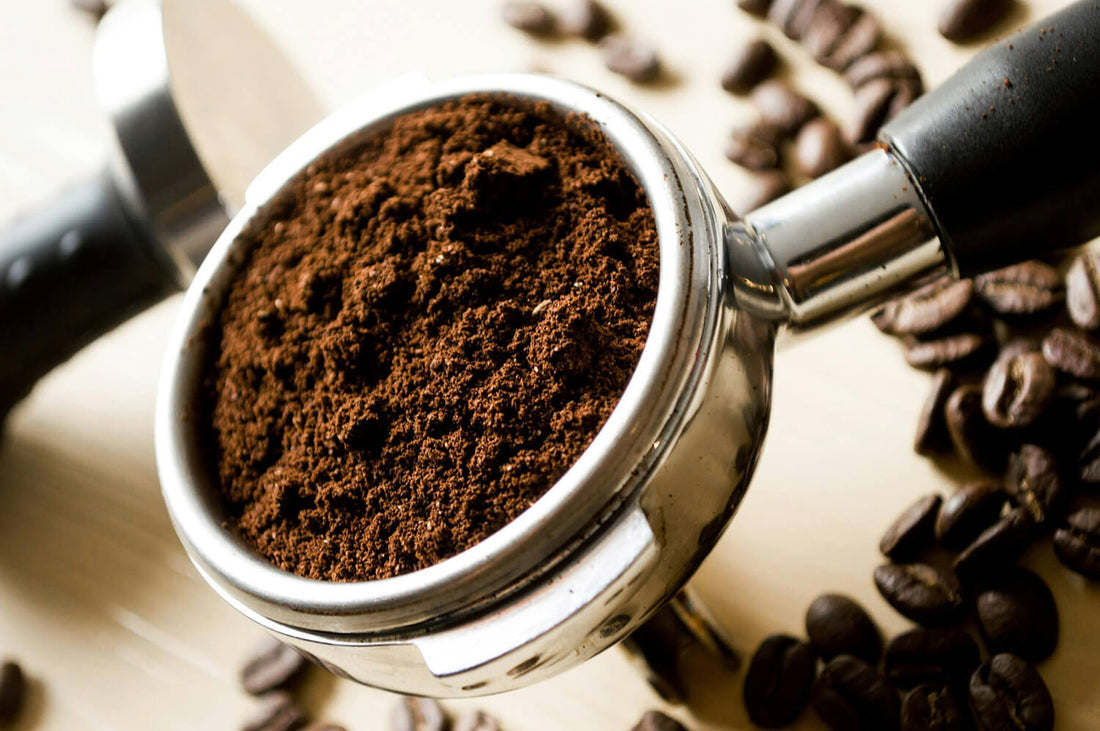
Fine grinds consist of very small, tightly packed coffee particles that create significant resistance to water flow. Because the particles are so close together, water moves through them slowly, dramatically increasing contact time between water and coffee. This extended interaction allows water to dissolve a large quantity of soluble compounds very quickly—which can be either beneficial or destructive depending on the brewing method and overall balance.
When a grind is too fine for the chosen brew method, extraction quickly moves past the optimal zone. Water continues dissolving compounds even after sweetness and balance have peaked, pulling out excessive bitter compounds, tannins, and astringent elements from the coffee’s cell structure. The result is a cup that feels aggressive rather than refined.
Flavor Effects of a Too-Fine Grind
A grind that is too fine commonly produces the following sensory outcomes:
-
Over-extraction, where undesirable compounds dominate the cup
-
Bitterness, often sharp or lingering rather than pleasantly bitter-sweet
-
Astringency, creating a drying sensation on the tongue and gums
-
Muted sweetness, because sugars are overshadowed by harsh compounds
-
Harsh, burnt, or smoky notes, even when the coffee itself is not dark roasted
-
Muddy or heavy mouthfeel, especially in filter methods
In espresso, grinding too fine can cause the puck to become overly compacted. Water struggles to pass through, leading to “choked” shots that drip slowly or stall entirely. These shots often taste intensely bitter, dry, and unbalanced, with very little clarity or sweetness despite their strength.
In pour-over or drip brewing, an overly fine grind can stall drawdown, trap fines in the filter, and prevent proper flow. This flattens acidity, suppresses aromatics, and produces cups that taste heavy, dull, or muddy rather than clean and expressive. What should be a bright, layered cup instead becomes congested and lifeless.
It’s important to note that fine grinds themselves are not inherently bad. In fact, they are absolutely essential for certain brewing methods—most notably espresso—where high pressure and short extraction times require a fine grind to generate the necessary resistance and concentration. The problem arises only when fine grinds are mismatched with the brewing parameters.
Fine grinds work beautifully when paired correctly with:
-
Appropriate pressure (as in espresso)
-
Proper dose and distribution
-
Controlled extraction time
-
Stable water temperature
When those elements are aligned, fine grinds unlock intense sweetness, syrupy body, and rich crema. When they are not, the same grind size becomes the fastest path to bitterness and imbalance.
Understanding when to use a fine grind—and when to back off—is a critical step in mastering extraction and learning how grind size shapes flavor with precision rather than force.
Coarse Grind: What Happens When Coffee Is Ground Too Coarse
Coarse grinds consist of large, irregular coffee particles with relatively little exposed surface area compared to finer grinds. Because there is less surface area available, water has fewer opportunities to dissolve flavor compounds as it passes through the coffee bed. At the same time, the large gaps between particles allow water to flow quickly and freely, dramatically shortening contact time. The combination of low surface area and fast flow means extraction happens slowly and incompletely.
When grind size is too coarse for the chosen brewing method, extraction stops before the coffee reaches its balanced, sweet middle phase. Water pulls out the earliest-extracting compounds—primarily acids and salts—but leaves behind sugars, lipids, and body-building compounds. The result is under-extracted coffee, which often tastes unfinished and unstructured rather than clean or light.
Flavor Effects of a Too-Coarse Grind
-
Pronounced sourness or sharp acidity
Acids extract first, and without enough sweetness to balance them, the cup tastes sharp or puckering rather than lively. -
Thin or watery body
Sugars and oils that create weight and mouthfeel never fully dissolve, leaving the coffee feeling empty or diluted even at correct strength. -
Hollow or grassy flavors
Under-developed extraction exposes vegetal or raw notes, especially in lighter roasts. -
Muted sweetness and aroma
Without mid-stage extraction, caramelized sugars and aromatic compounds remain locked in the grounds. -
Short, unsatisfying finish
Flavors disappear quickly instead of lingering and evolving on the palate.
This is why a pour-over brewed with a grind that’s too coarse can taste bright but lifeless, or why a drip coffee might feel watery even when brewed at the right ratio. The coffee isn’t weak—it’s incomplete.
Where Coarse Grinds Work Best
Coarse grinds are not inherently bad. In fact, they are essential for certain brewing methods that rely on long contact times and full immersion:
-
French press: Long steep times (4–5 minutes) compensate for slow extraction.
-
Cold brew: Extremely long contact times (12–24 hours) require very coarse grinds to prevent bitterness.
-
Cupping: Coarse grinds ensure gentle, even extraction over extended immersion.
In these methods, time replaces resistance. Water has hours or minutes—rather than seconds—to dissolve sugars and oils gradually.
Where Coarse Grinds Fail
Coarse grinds are disastrous for fast or pressurized brewing methods:
-
Espresso: Water rushes through too quickly, producing sour, thin shots with little crema.
-
AeroPress (short brews): Extraction ends before balance develops.
-
Fast pour-over recipes: Flow becomes uncontrollable, leading to weak, acidic cups.
In short, grind size must always match brew speed. If water moves quickly, grind finer. If water stays longer, grind coarser.
When coffee tastes sharp, thin, or hollow, the solution is often simple: grind slightly finer and let extraction reach the sweet spot where balance, sweetness, and body emerge.
Grind Consistency: Size Is Useless Without Uniformity
Grind size means very little if the grind is inconsistent.
When a grinder produces a mix of:
-
Fines (dust-like particles)
-
Boulders (large chunks)
You get simultaneous over-extraction and under-extraction in the same cup.
-
Fines over-extract → bitterness
-
Boulders under-extract → sourness
The result is a confused cup that tastes both sharp and harsh at the same time.
This is why burr grinders are essential for quality brewing. Blade grinders chop randomly, while burr grinders crush beans into uniform particles that extract evenly.
Grind Size by Brewing Method (and Why It Works)
Espresso – Fine to Very Fine
-
Brew time: 25–35 seconds
-
Pressure: ~9 bars
-
Fine grind creates resistance
-
Allows controlled extraction under pressure
-
Produces crema, body, and concentration
Pour-Over (V60, Kalita, Chemex) – Medium-Fine
-
Brew time: 2.5–4 minutes
-
Gravity-driven flow
-
Medium-fine grind balances clarity and sweetness
-
Too fine → stalled flow
-
Too coarse → weak, sour cup
Drip Coffee Maker – Medium
-
Automated flow rate
-
Medium grind aligns with filter and brew time
-
Produces balanced, approachable cups
French Press – Coarse
-
Full immersion
-
Long contact time (4–5 minutes)
-
Coarse grind prevents over-extraction and sludge
-
Enhances body and smoothness
Cold Brew – Extra Coarse
-
Extremely long extraction (12–24 hours)
-
Extra coarse grind prevents bitterness
-
Produces smooth, low-acid coffee
How Roast Level Interacts with Grind Size
Roast level changes bean structure.
-
Light roasts are denser → extract slower → often benefit from slightly finer grind
-
Dark roasts are more brittle → extract faster → often need slightly coarser grind
Using the same grind size across roast levels often leads to imbalance. Adjust grind when you change roast.
Diagnosing Grind Problems by Taste
Forget recipes for a moment. Your palate is the best diagnostic tool.
-
Sour, sharp, thin coffee → grind finer
-
Bitter, dry, harsh coffee → grind coarser
-
Flat, muddy coffee → grind inconsistency or over-extraction
-
Hollow coffee → grind too coarse or under-dosed
Adjust one variable at a time, and make small changes. In espresso, one click can change everything.
Why Grind Size Is the Most Powerful Variable You Control
You can’t change where coffee was grown. You can’t change how it was roasted. But you can control grind size—and that control unlocks flavor.
Grind size:
-
Determines extraction speed
-
Shapes balance and sweetness
-
Controls body and mouthfeel
-
Influences clarity and aroma
-
Affects finish and aftertaste
Mastering grind size means mastering extraction. And mastering extraction means consistently great coffee.
Final Thoughts: Grind Size Is Flavor Control
Grind size is not just a technical detail—it is the steering wheel of coffee flavor. Fine or coarse is not about preference; it’s about alignment between coffee, water, time, and method. Once you understand how grind size shapes extraction, you stop chasing recipes and start responding to flavor.
When coffee tastes wrong, the fix is often simple: change the grind.
Do that, and coffee becomes less mysterious, more expressive, and infinitely more satisfying—one perfectly dialed cup at a time.